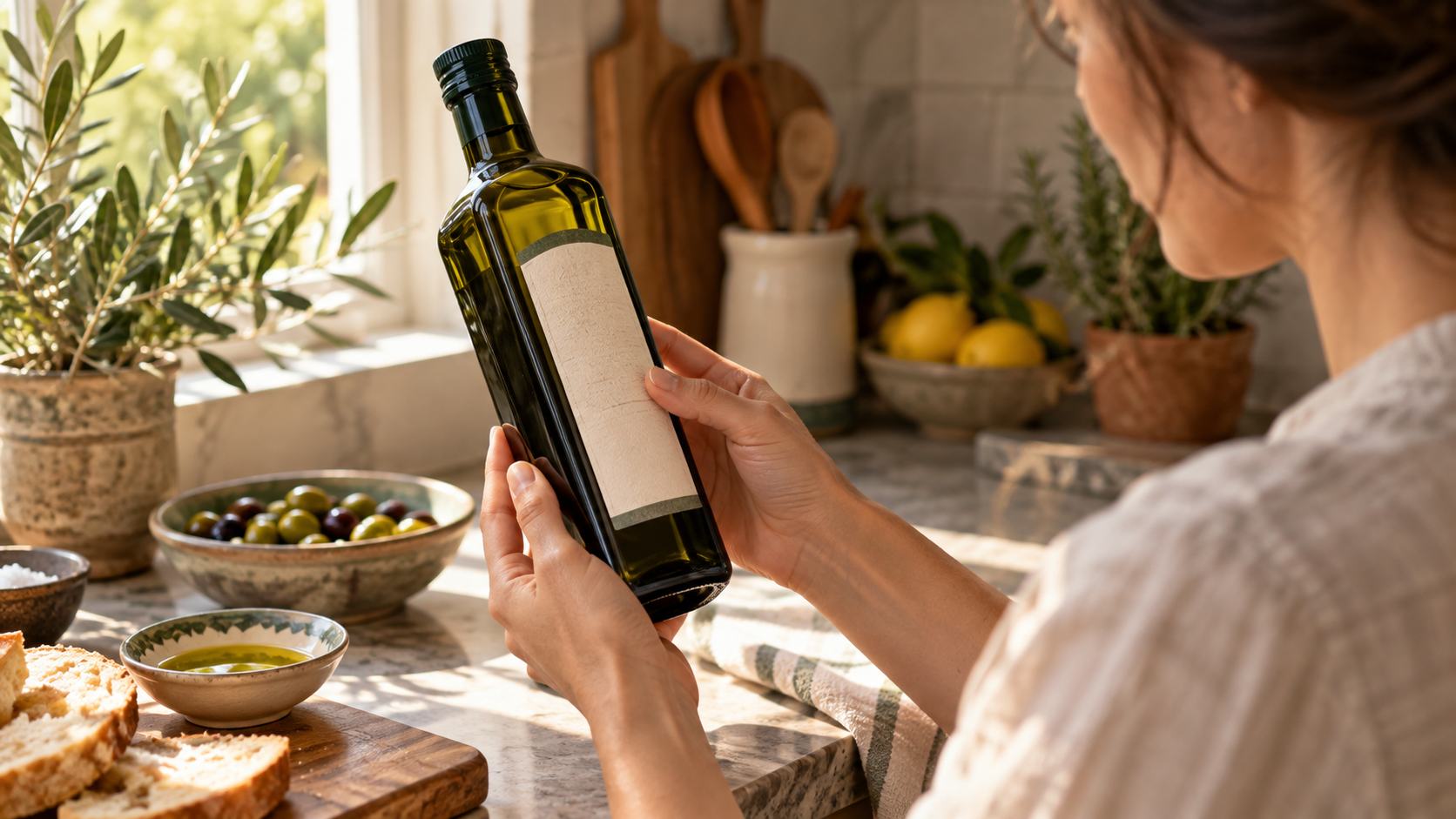
“Extra virgin” is the highest grade of olive oil, and the most copied. Some bottles on supermarket shelves are blends, old oil, or a lower grade sold under a better name. You can't test a bottle in a lab at the store, but the label, the bottle and your own taste tell you a lot.
Look for a harvest date, not just a best-by date
Olive oil is a fresh juice, and it's at its best within about 18 months of harvest. A best-by date alone tells you little, because some producers set it two years after bottling. A harvest date, or a harvest season like “2025/26,” shows the producer knows exactly when the olives were picked.
Check where the olives were grown, not where the oil was bottled
“Packed in Italy” or “Imported from Italy” doesn't mean the olives grew there. Many bottles blend oils from several countries. Look for a single named country, or better, a region or village. The more specific the origin, the more accountable the producer.
Be wary of a price that seems too good
Producing real extra virgin olive oil takes careful harvesting and fast pressing. A very low price per liter compared with other extra virgin oils is a reason to look harder at the label. Price alone doesn't prove quality, but it's a useful red flag.
Read the grade carefully
Only “extra virgin” is the top grade. “Pure olive oil,” “light olive oil” and “olive oil” with no grade are refined or blended oils. They're fine for some cooking, but they're not extra virgin.
Look for third-party seals and lab numbers
Some producers publish lab results such as free acidity and peroxide value, or carry seals from independent tasting and testing programs. Extra virgin olive oil must have free acidity of 0.8% or less under international standards. A producer willing to share numbers has nothing to hide.
Taste it on its own
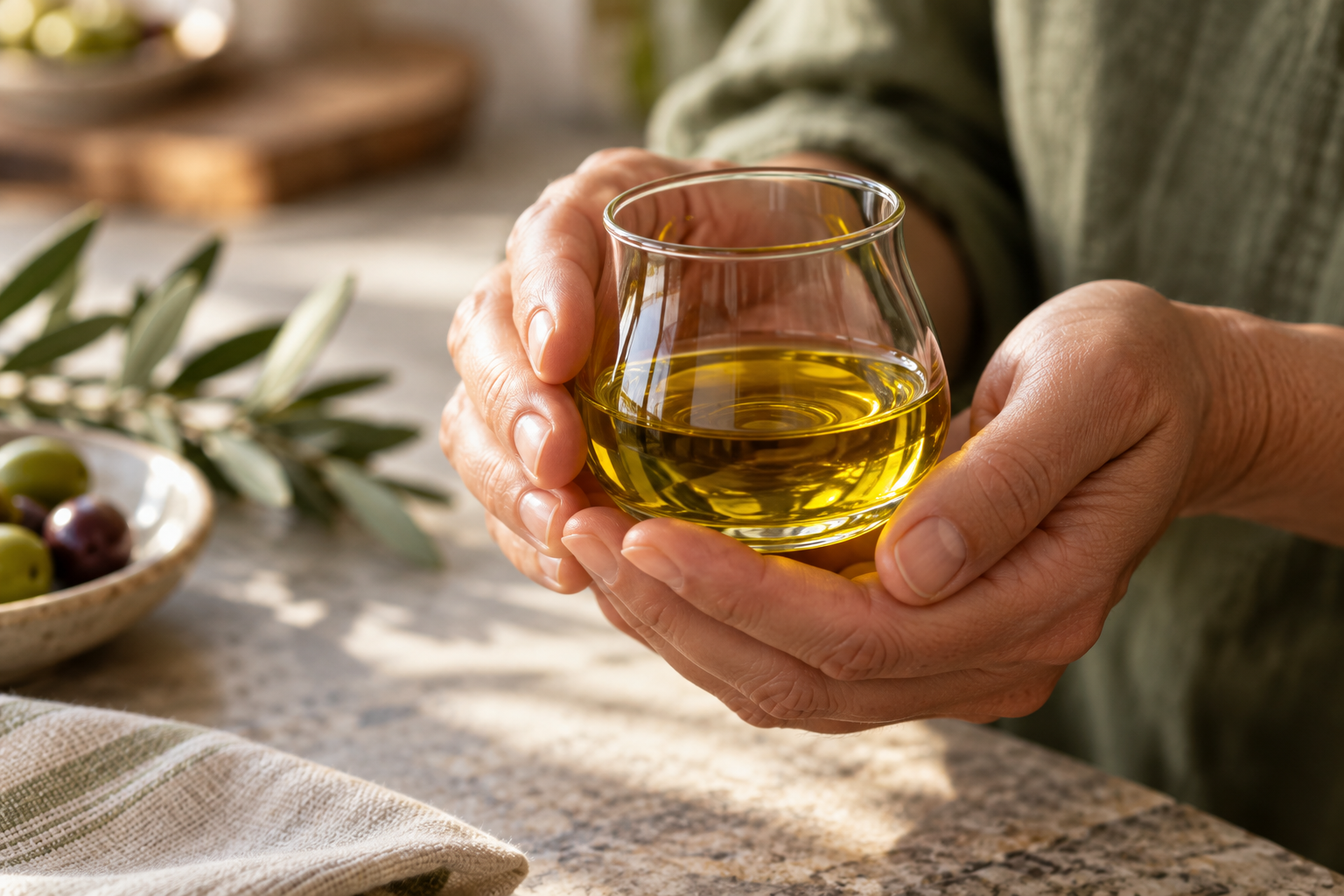
Pour a spoonful into a small glass, warm it in your hand, smell it, then sip. Real extra virgin olive oil smells fresh, like cut grass, green olives, herbs or fruit. It may taste a little bitter and leave a peppery tickle in your throat. Those are signs of freshness, not defects. Flat, greasy, musty or crayon-like flavors mean the oil is old or poor quality.
Skip the fridge test
You may have read that real olive oil solidifies in the fridge. It isn't a reliable test: how oil behaves in the cold depends on the olive variety and the temperature, and some blends cloud too. Trust the label, the origin and your taste instead.
How to keep good oil good
Light, heat and air are what age olive oil fastest. Whatever bottle it comes in, keep it in a cool, dark cupboard away from the stove, close the cap tightly, and use it within a few months of opening.
How we label Daher Olive Oil
We tell you exactly where our oil comes from: family groves in Klayaa – Deir Mimas, South Lebanon, with trees more than 300 years old. The olives are handpicked and first cold pressed, and the oil is bottled unfiltered. One family, one village, one origin.